Novozymes Leather Enzymes: Using Leather Processing Enzymes in Bating Formulations
Formulation guide for leather enzymes in bating: pH, temperature, dosage, QC, COA/TDS/SDS review, pilot trials, and supplier qualification.
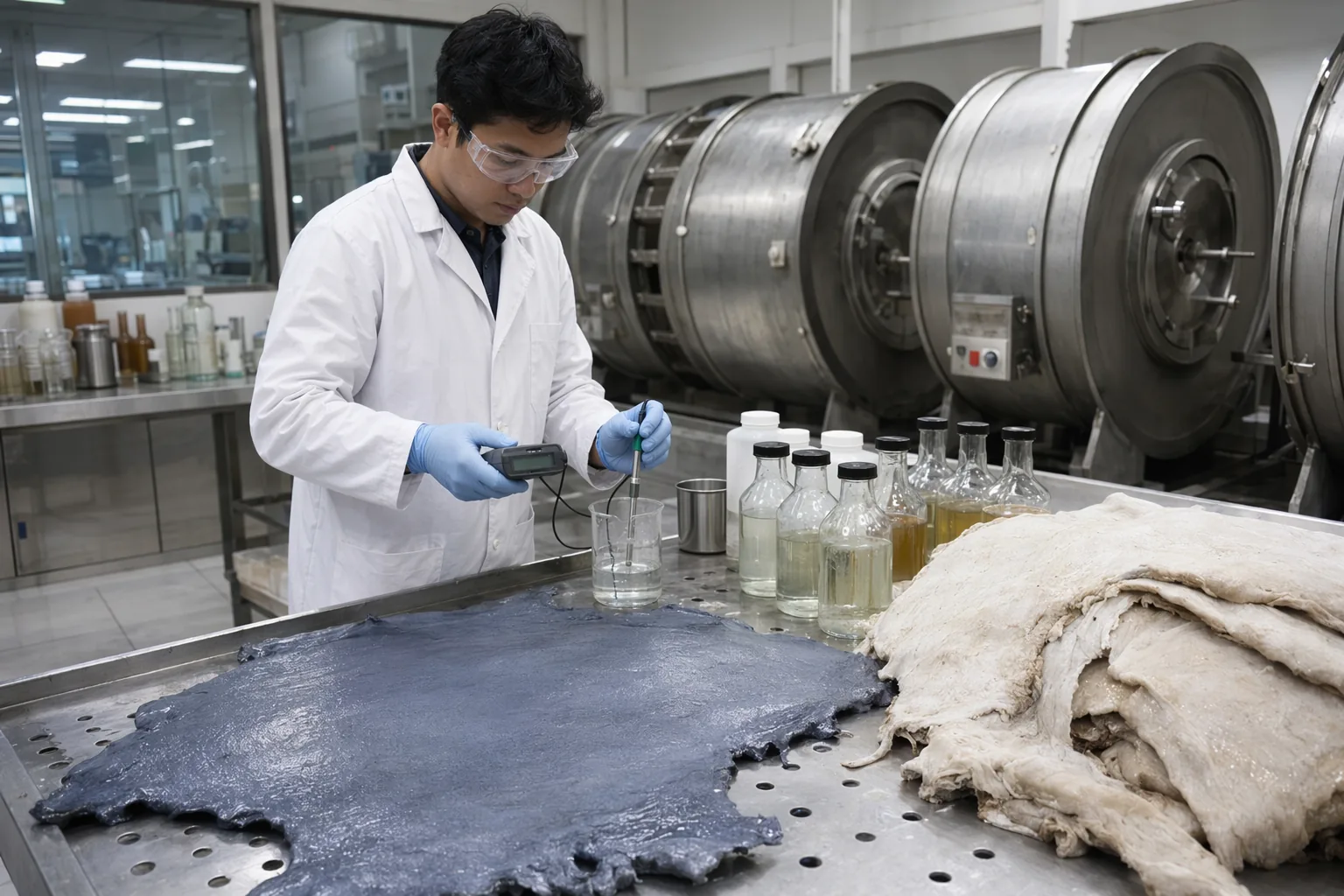
A practical B2B guide for tanneries, formulators, and procurement teams evaluating leather enzymes for controlled bating, dehairing support, and wet-end process optimization.
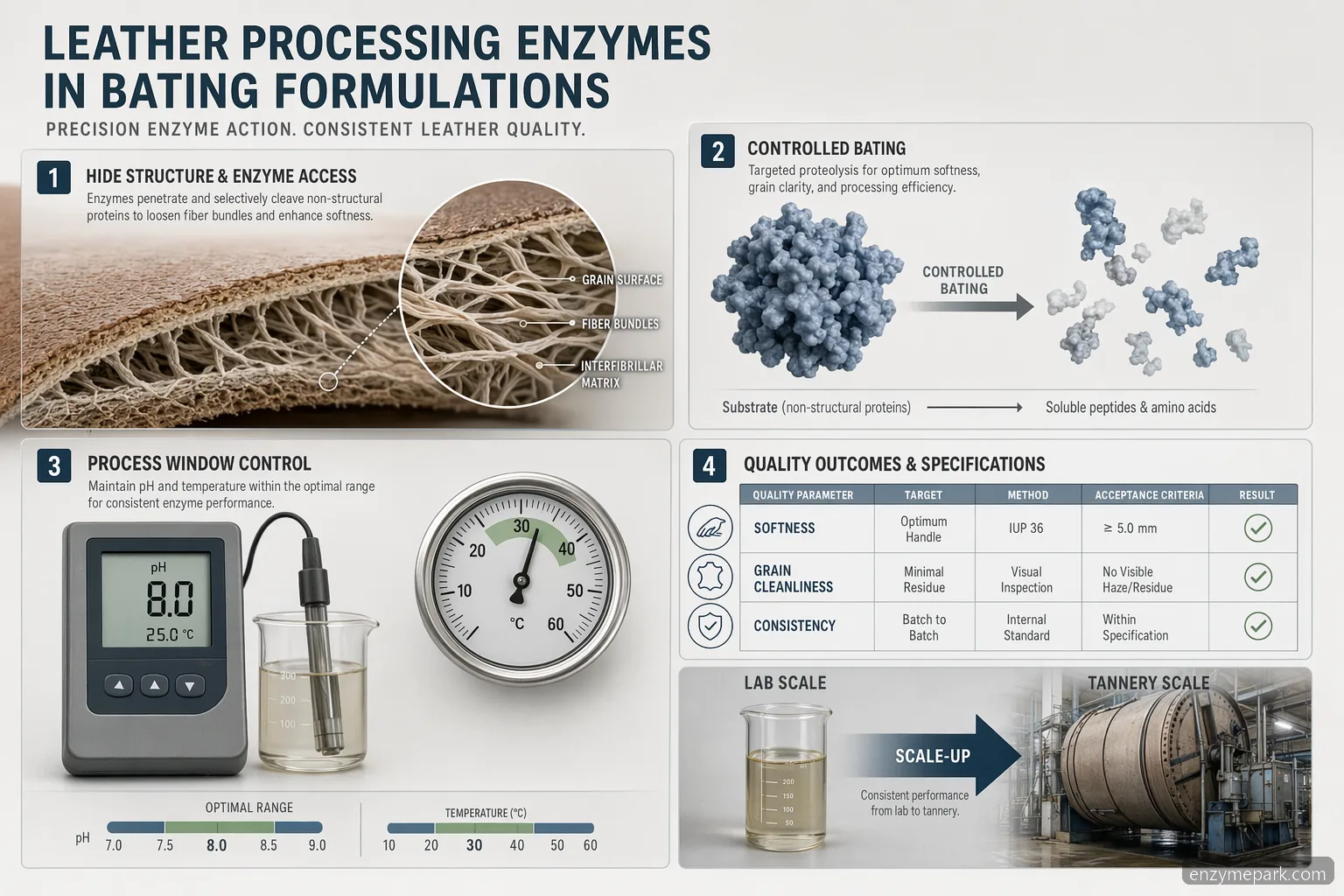
What buyers mean by Novozymes leather enzymes
Many procurement teams search for “novozymes leather enzymes” when they are really evaluating industrial leather enzymes from qualified enzyme suppliers. In leather bating, the key requirement is not the name alone but the match between enzyme activity, process window, substrate selectivity, and tannery control systems. Bating enzymes are commonly protease preparations designed to act on non-collagenous proteins after liming and deliming, helping prepare the pelt for predictable tanning and finishing. The formulation may be supplied as a powder, granule, or liquid blend, often supported by dispersing agents, buffers, or stabilizers. For B2B sourcing, compare products by activity assay, recommended dosage, pH and temperature stability, batch consistency, shelf life, and technical documentation. Avoid selecting a leather processing enzyme only by unit price; the relevant metric is cost-in-use at the tannery’s actual drum conditions.
Primary application: leather bating after deliming • Typical enzyme class: alkaline or neutral protease • Buyer focus: process consistency and cost-in-use
Role of enzymes used in leather industry bating
The use of enzymes in leather industry operations is intended to make wet processing more selective and controllable. In bating, proteases help remove interfibrillary proteins, scud, and residual epidermal materials that remain after beamhouse steps. This can improve opening-up, softness, grain smoothness, and dyeing uniformity when controlled correctly. Over-bating, however, can loosen the grain or reduce physical strength, so enzyme choice and drum control are critical. Bating is different from a leather safe enzyme cleaner or an enzyme cleaner for leather used on finished goods; tannery enzymes act on wet pelts under controlled industrial conditions and should not be applied casually to finished leather articles. Enzymes in leather industry formulations may also support dehairing or soaking, but each application requires a different enzyme profile, pH range, and risk assessment.
Bating targets non-structural proteins, not collagen damage • Finished leather cleaning products are not equivalent to tannery bating enzymes • Separate validation is needed for bating, dehairing, soaking, and tanning support
Starting formulation and process conditions
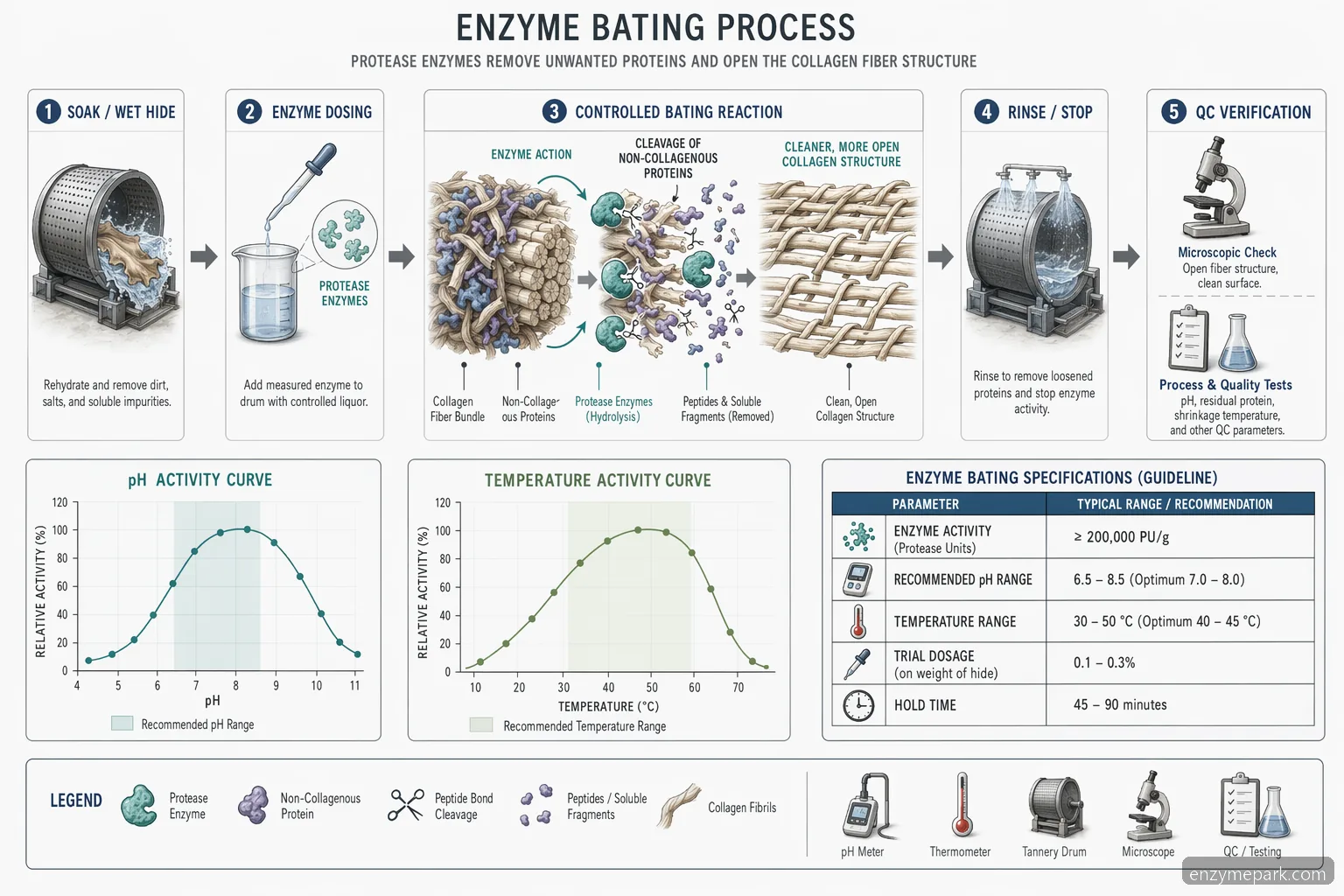
A practical bating formulation usually begins after deliming, when the pelt pH has been reduced from highly alkaline liming conditions. For many protease-based leather processing enzymes, a starting process window is pH 7.5–9.5 at 30–40°C for 30–90 minutes. Typical trial dosage may range from 0.05–0.30% enzyme product on pelt weight, depending on declared activity, hide origin, thickness, drum load, float, and required handle. Some systems run slightly outside this range, so the supplier’s TDS should be treated as the controlling document. Add the enzyme after confirming deliming uniformity and avoid hot spots, concentrated chemical contact, or prolonged holding times. Maintain good float movement and record drum speed, float percentage, temperature rise, pH drift, and process time so the formulation can be scaled from laboratory drum to production drum.
Trial pH: 7.5–9.5 unless the TDS states otherwise • Trial temperature: 30–40°C with controlled heating • Trial dosage: 0.05–0.30% on pelt weight • Trial time: 30–90 minutes with scheduled checks
QC checks during leather bating trials
Pilot validation should combine operator evaluation with measurable quality checks. During bating, monitor float pH, temperature, time, and visual scud removal. After the run, assess grain cleanliness, slipperiness, opening-up, handle, and the risk of looseness. For production qualification, compare treated crust or finished leather against the current process for tensile strength, tear strength, elongation, thickness, area yield, color levelness, dye penetration, and grain break. Include wastewater indicators such as COD, nitrogen load, sulfide status where relevant, and total chemical consumption, because enzyme tanning support or beamhouse enzyme use can affect downstream effluent treatment. Establish acceptance limits before the trial begins. If the new bating enzyme gives a softer handle but lowers strength or creates inconsistent grain, the formulation may need lower dosage, shorter time, altered pH, or a different enzyme activity profile.
Track pH, temperature, time, and float ratio • Compare handle and grain against a control lot • Measure physical strength before approval • Review wastewater and total chemical consumption
Supplier documentation and qualification
Before purchasing leather enzymes at production scale, request a current COA, TDS, and SDS for the exact commercial product. The COA should identify batch number, activity or specification limits, manufacturing date, and expiry or retest date. The TDS should describe recommended application, pH and temperature range, dosage guidance, storage conditions, and compatibility cautions. The SDS should be reviewed for respiratory sensitization, dust control, PPE, spill handling, and transport information. Supplier qualification should also examine batch-to-batch consistency, change notification practices, technical support, minimum order quantity, lead time, packaging integrity, and ability to support pilot troubleshooting. If the product is part of a formulated bating auxiliary, clarify whether activity is standardized and whether any carriers, preservatives, or stabilizers may influence downstream tanning, dyeing, or finishing.
Request COA, TDS, and SDS before plant trials • Confirm activity assay and shelf-life conditions • Assess lead time, MOQ, packaging, and change control • Verify technical support for pilot and scale-up
Cost-in-use and scale-up strategy
The lowest invoice price is not always the lowest cost-in-use. A leather bating enzyme should be evaluated by dosage needed to meet quality targets, rework reduction, process time, chemical savings, energy profile, wastewater effect, and consistency across hide lots. Build a trial matrix with at least a control, low dose, target dose, and high dose under the same deliming and drum conditions. Record enzyme grams per kilogram of pelt, total batch cost, quality outcomes, and any changes in downstream tanning or finishing. For scale-up, avoid changing several variables at once. Confirm mixing, addition point, float ratio, and temperature control in the production drum. Once approved, create a process specification with acceptable pH, temperature, dosage, time, QC checkpoints, corrective actions, and storage rules for operators and quality teams.
Compare cost per processed hide or square meter • Include rework, wastewater, and downstream effects • Use a controlled pilot matrix before scale-up • Lock approved parameters into the production SOP
Technical Buying Checklist
Buyer Questions
Leather bating most commonly uses protease enzymes that act on non-collagenous proteins remaining after liming and deliming. Depending on the process, suppliers may offer neutral or alkaline protease systems in powder, granule, or liquid form. Other enzymes can be used in soaking or dehairing, but they are not automatically suitable for bating. Always match the enzyme class, pH range, activity, and dosage to the specific tannery process.
Start with the supplier’s TDS, then run a controlled pilot matrix. A practical first screen may test 0.05%, 0.15%, and 0.30% enzyme product on pelt weight, plus the current process as a control. Keep pH, temperature, float ratio, and time constant. Choose the dose that delivers the required grain cleanliness and handle without looseness, strength loss, rework, or negative downstream effects.
No. A leather safe enzyme cleaner or enzyme cleaner for leather is usually designed for cleaning finished articles under mild consumer or maintenance conditions. Industrial leather bating enzymes are used on wet pelts in tannery drums under defined pH, temperature, and time controls. Applying tannery enzymes to finished leather can damage surface properties. Treat these as different product categories with different safety and performance requirements.
Request the COA, TDS, and SDS for the exact product and batch being evaluated. The COA should show specification or activity data, batch identification, and date information. The TDS should provide application guidance, pH and temperature range, dosage, and storage instructions. The SDS should cover handling hazards, respiratory sensitization risk, PPE, spills, and transport. Also ask about shelf life, change control, and technical support.
Enzymes can support cleaner and more controlled wet processing, but they do not generally replace the chemistry that stabilizes collagen in conventional tanning systems. In practice, enzyme tanning discussions often refer to enzyme-assisted beamhouse, bating, dehairing, or preparation steps that improve pelt condition before tanning. Any change to tanning chemistry should be validated separately for shrinkage temperature, physical strength, color, handle, and long-term leather performance.
Leather Processing Enzymes for Research & Industry
Need Leather Processing Enzymes for your lab or production process?
ISO 9001 certified · Food-grade & research-grade · Ships to 80+ countries
Frequently Asked Questions
What enzymes are used in leather industry bating?
Leather bating most commonly uses protease enzymes that act on non-collagenous proteins remaining after liming and deliming. Depending on the process, suppliers may offer neutral or alkaline protease systems in powder, granule, or liquid form. Other enzymes can be used in soaking or dehairing, but they are not automatically suitable for bating. Always match the enzyme class, pH range, activity, and dosage to the specific tannery process.
How should a tannery set the dosage for a bating enzyme?
Start with the supplier’s TDS, then run a controlled pilot matrix. A practical first screen may test 0.05%, 0.15%, and 0.30% enzyme product on pelt weight, plus the current process as a control. Keep pH, temperature, float ratio, and time constant. Choose the dose that delivers the required grain cleanliness and handle without looseness, strength loss, rework, or negative downstream effects.
Are leather bating enzymes the same as enzyme cleaner for leather?
No. A leather safe enzyme cleaner or enzyme cleaner for leather is usually designed for cleaning finished articles under mild consumer or maintenance conditions. Industrial leather bating enzymes are used on wet pelts in tannery drums under defined pH, temperature, and time controls. Applying tannery enzymes to finished leather can damage surface properties. Treat these as different product categories with different safety and performance requirements.
What documents should industrial buyers request from a leather enzyme supplier?
Request the COA, TDS, and SDS for the exact product and batch being evaluated. The COA should show specification or activity data, batch identification, and date information. The TDS should provide application guidance, pH and temperature range, dosage, and storage instructions. The SDS should cover handling hazards, respiratory sensitization risk, PPE, spills, and transport. Also ask about shelf life, change control, and technical support.
Can enzymes replace tanning chemicals in enzyme tanning?
Enzymes can support cleaner and more controlled wet processing, but they do not generally replace the chemistry that stabilizes collagen in conventional tanning systems. In practice, enzyme tanning discussions often refer to enzyme-assisted beamhouse, bating, dehairing, or preparation steps that improve pelt condition before tanning. Any change to tanning chemistry should be validated separately for shrinkage temperature, physical strength, color, handle, and long-term leather performance.
Related: Cleaner Leather Processing Starts Here
Turn This Guide Into a Supplier Brief Send your hide type, process window, and target leather article to request a bating enzyme formulation review and pilot-trial plan. See our application page for Cleaner Leather Processing Starts Here at /applications/leather-safe-enzyme-cleaner/ for specs, MOQ, and a free 50 g sample.
Contact Us to Contributehello@mail.enzymepark.com