How to Use Leather Processing Enzymes in Leather Bating Formulations
Formulate leather enzymes for bating with pH, temperature, dosage, QC, COA/TDS/SDS review, pilot validation, and cost-in-use guidance.
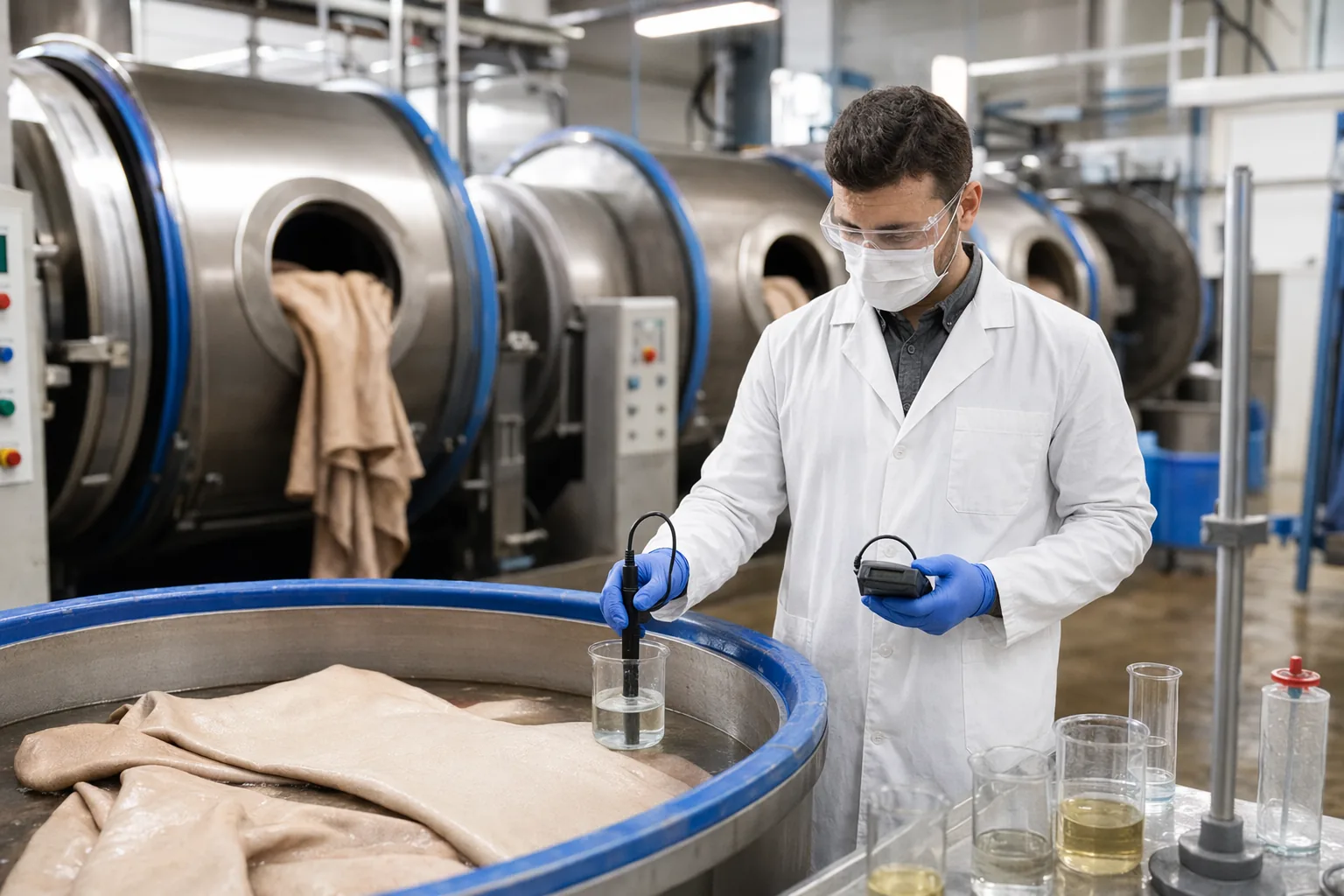
Industrial leather enzymes help tanneries control bating, improve grain cleanliness, and reduce variability when matched to the right process window. For tanneries, distributors and resellers buying in bulk: request a quote with the product, quantity and destination.
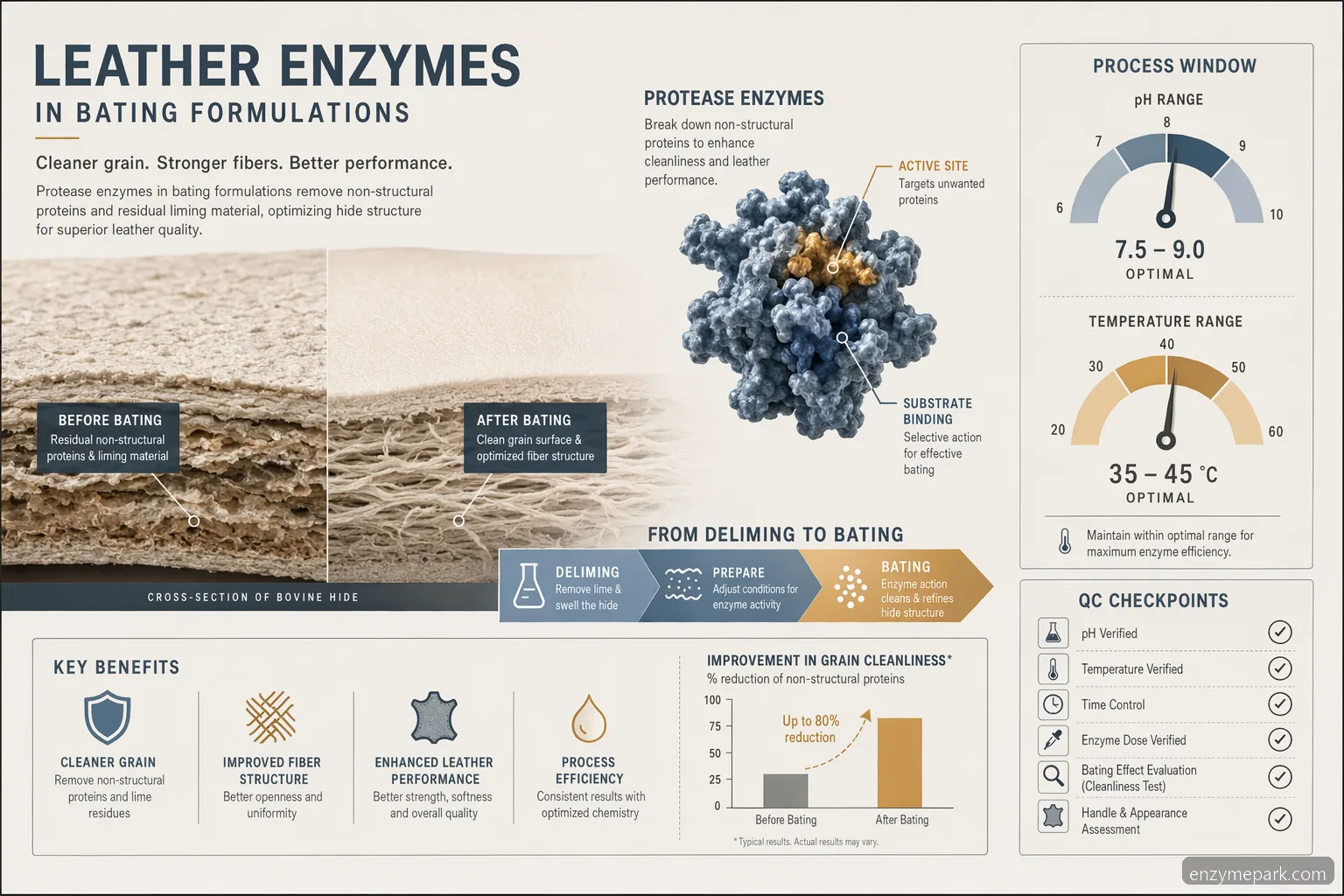
Why Leather Enzymes Matter in Bating
Leather bating is a controlled enzymatic step used after liming and deliming to remove non-structural proteins, improve grain smoothness, and prepare pelts for tanning. In modern leather processing enzymes, protease activity is commonly used because it can act selectively on unwanted proteins when the pH, temperature, dosage, and time are properly controlled. For B2B buyers, the goal is not simply higher activity, but repeatable performance across hides, drums, water quality, and seasonal raw material variation. A well-selected bating enzyme can support cleaner grain, better softness, improved opening-up, and more consistent uptake in downstream tanning or enzyme tanning support systems. Over-bating, however, can weaken fiber structure, so formulation discipline is essential. The use of enzymes in leather industry processes should always be validated against the tannery's own hides, process sequence, and final article specifications.
Primary function: controlled removal of non-collagenous proteins • Common enzyme class: alkaline or neutral protease blends • Main risk: excessive proteolysis if dosage or time is uncontrolled
Recommended Formulation Window
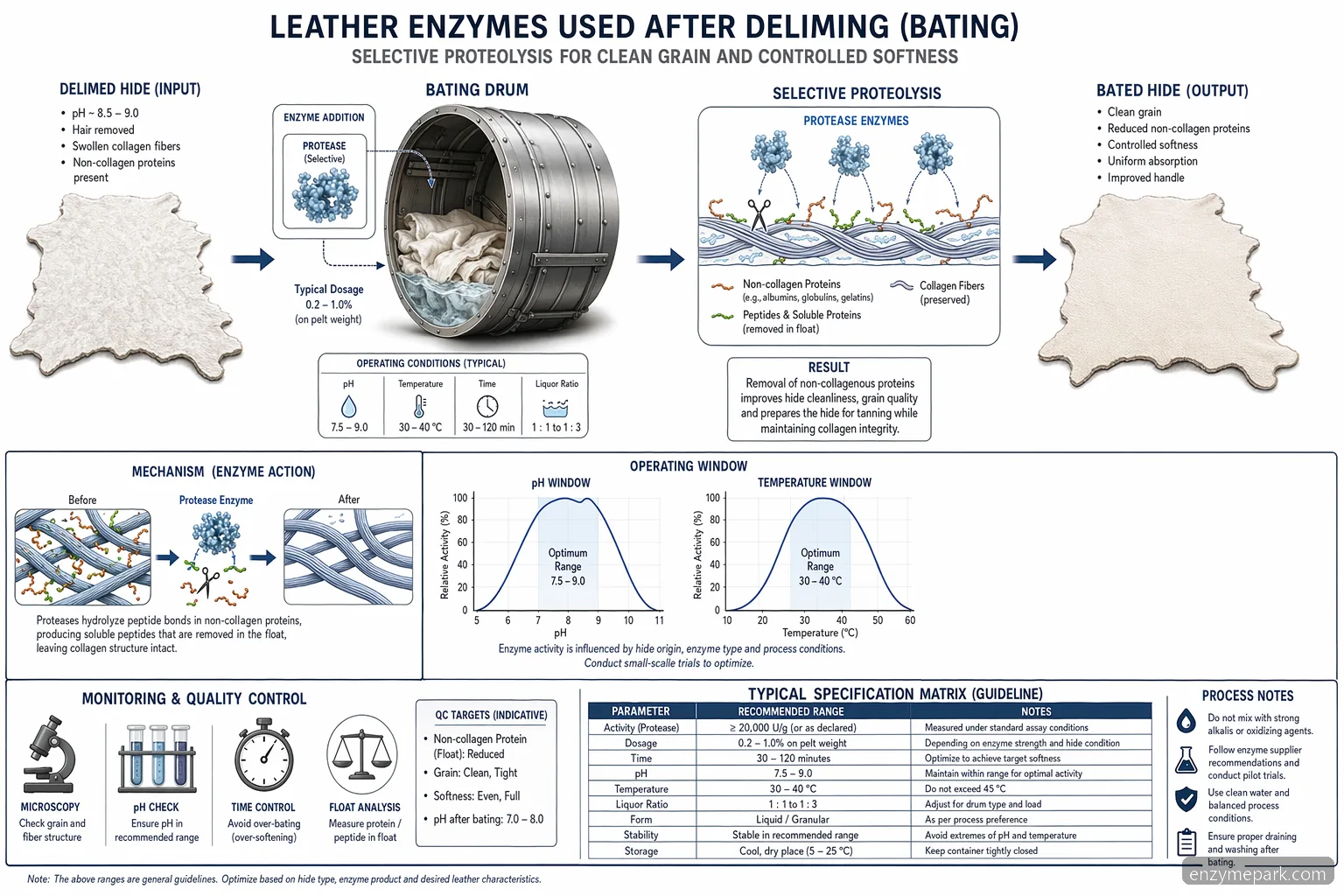
For leather bating, many commercial leather enzymes are applied after deliming when the pH has been reduced to a controlled working range. A practical starting window is pH 7.5-8.8 for alkaline bating enzymes, or pH 6.5-7.5 for neutral systems, depending on the TDS. Typical process temperatures are 32-38°C, with 35°C often used as a pilot starting point. Dosage may begin at 0.05-0.30% on pelt weight, adjusted by enzyme activity, hide type, pelt thickness, drum load, and target article. Contact time commonly ranges from 30 to 90 minutes. Avoid adding enzyme into highly alkaline lime liquor unless the product is specifically designed for that stage. The best leather processing enzyme formulation should be built from supplier activity data, small-drum trials, and measurable end points rather than fixed generic recipes.
Starting pH: 6.5-8.8, based on enzyme type • Starting temperature: 32-38°C • Trial dosage: 0.05-0.30% on pelt weight • Trial time: 30-90 minutes
Process Integration After Deliming
The bating step should be integrated with deliming, washing, and pickling targets. Before enzyme addition, confirm that residual lime and alkalinity are within the intended range, because uncontrolled pH can reduce enzyme efficiency or create uneven bating. Add the diluted enzyme solution to the drum under rotation to improve distribution and avoid localized overexposure. Mechanical action, float length, and load density should remain consistent during trials because they strongly affect penetration and uniformity. If the tannery uses auxiliary surfactants, degreasers, or biocides, confirm enzyme compatibility with the supplier before production use. A leather safe enzyme cleaner used for finished leather maintenance is not the same as a bating enzyme; industrial bating formulations are designed for wet-end pelt processing, not consumer cleaning of finished articles.
Check deliming pH before dosing • Dilute enzyme before addition for even distribution • Maintain consistent float, rotation, and load conditions • Confirm compatibility with auxiliaries and preservatives
QC Checks for Bating Performance
Quality control should combine process measurements with leather evaluation. During bating, track pH, temperature, time, drum speed, and dosage for every trial. At the pelt stage, operators often assess slipperiness, scud removal, grain cleanliness, and cross-section handle. Laboratory checks may include shrinkage temperature after tanning, tensile strength, tear strength, grain break, softness, and dyeing uniformity, depending on the final leather article. Compare the enzyme-treated lots against the current standard process, not only against an untreated control. If the result shows loose grain, excessive softness, or weak break, reduce dosage, time, temperature, or mechanical intensity. If the result shows poor opening-up or grain residues, verify deliming efficiency first, then adjust enzyme activity or contact time. This approach keeps enzymes in leather industry processes measurable and commercially controlled.
Record pH, temperature, dosage, time, and drum conditions • Evaluate grain cleanliness, softness, and scud removal • Run physical tests on finished leather where relevant • Compare against current production standard
Supplier Qualification and Cost-in-Use
Industrial buyers should qualify leather enzymes with both technical and commercial criteria. Request the COA for batch activity and appearance, the TDS for application conditions, and the SDS for handling, storage, and safety information. Ask for recommended pH and temperature ranges, activity method, shelf life, storage conditions, allergen or dust handling guidance, and compatibility notes. Cost should be evaluated as cost-in-use, not price per kilogram, because enzyme concentration, activity stability, dosage, process time, and rework reduction all affect economics. Pilot validation should move from beaker or paddle tests to small drum trials and then controlled production trials. Supplier qualification should also consider batch-to-batch consistency, lead time, documentation responsiveness, and ability to support troubleshooting when raw hides, water quality, or seasonal conditions change.
Review COA, TDS, and SDS before purchase • Validate activity under actual tannery conditions • Compare cost-in-use rather than unit price alone • Assess batch consistency and technical support
Technical Buying Checklist
Buyer Questions
Proteases are the main enzymes used in leather industry bating because they help remove non-collagenous proteins after liming and deliming. Neutral or alkaline protease systems are selected according to the tannery's pH, temperature, and desired softness. Some formulations may include supporting activities, but buyers should confirm the declared function, activity method, and process window on the supplier TDS.
Begin with a controlled pilot trial, commonly 0.05-0.30% enzyme on pelt weight, then adjust by activity strength, hide thickness, drum load, and target article. Keep pH, temperature, time, and mechanical action constant while changing only one variable at a time. Final dosage should be based on grain quality, softness, physical test results, and cost-in-use.
Leather processing enzymes can reduce reliance on some aggressive process conditions when properly integrated, but they do not automatically replace all chemicals in beamhouse operations. Deliming, washing, pickling, tanning, and retanning still need controlled chemistry. The best approach is to validate enzyme use in the full process sequence and compare leather quality, effluent impact, processing time, and total cost.
No. An enzyme cleaner for leather or leather safe enzyme cleaner is usually associated with cleaning finished goods or surfaces, while a bating enzyme is an industrial wet-end product used on limed and delimed pelts. Finished leather can be sensitive to moisture, pH, and cleaners, so consumer cleaning products should not be substituted for tannery bating enzymes.
Request a COA for the supplied batch, a TDS with application guidance, and an SDS for safe handling and storage. For supplier qualification, also ask about activity testing, pH and temperature stability, shelf life, packaging, batch traceability, and recommended trial design. These documents help compare products on performance, safety, consistency, and cost-in-use.
Request a Quote: Wholesale Supply for Tanneries and Resellers
We supply leather processing enzymes to tanneries, leather chemical distributors and resellers on a quote basis. Our Leather Processing Enzymes (Protease 200,000+ U/g; Lipase 50,000+ U/g) ship as light brown powder or granule in 25 kg fiber drums, with an MOQ of 25 kg; prices are quoted per order.
To get a quote, send three things: the product (Leather Processing Enzymes), the quantity per order or per month, and the destination country or port. Add your hide type and process stage if you also want trial guidance with the quote.
Use the quote form on the home page or email hello@mail.enzymepark.com.
Leather Processing Enzymes for Research & Industry
Need Leather Processing Enzymes for your lab or production process?
ISO 9001 certified · Food-grade & research-grade · Ships to 80+ countries
Frequently Asked Questions
What enzymes are used in leather industry bating?
Proteases are the main enzymes used in leather industry bating because they help remove non-collagenous proteins after liming and deliming. Neutral or alkaline protease systems are selected according to the tannery's pH, temperature, and desired softness. Some formulations may include supporting activities, but buyers should confirm the declared function, activity method, and process window on the supplier TDS.
How do I set the dosage for leather enzymes?
Begin with a controlled pilot trial, commonly 0.05-0.30% enzyme on pelt weight, then adjust by activity strength, hide thickness, drum load, and target article. Keep pH, temperature, time, and mechanical action constant while changing only one variable at a time. Final dosage should be based on grain quality, softness, physical test results, and cost-in-use.
Can leather processing enzymes replace harsh chemicals?
Leather processing enzymes can reduce reliance on some aggressive process conditions when properly integrated, but they do not automatically replace all chemicals in beamhouse operations. Deliming, washing, pickling, tanning, and retanning still need controlled chemistry. The best approach is to validate enzyme use in the full process sequence and compare leather quality, effluent impact, processing time, and total cost.
Is an enzyme cleaner for leather the same as a bating enzyme?
No. An enzyme cleaner for leather or leather safe enzyme cleaner is usually associated with cleaning finished goods or surfaces, while a bating enzyme is an industrial wet-end product used on limed and delimed pelts. Finished leather can be sensitive to moisture, pH, and cleaners, so consumer cleaning products should not be substituted for tannery bating enzymes.
What documents should I request before buying leather enzymes?
Request a COA for the supplied batch, a TDS with application guidance, and an SDS for safe handling and storage. For supplier qualification, also ask about activity testing, pH and temperature stability, shelf life, packaging, batch traceability, and recommended trial design. These documents help compare products on performance, safety, consistency, and cost-in-use.
Related: Cleaner Leather Processing Starts Here
Turn This Guide Into a Supplier Brief Contact Enzyme Park to discuss leather enzymes for bating trials, documentation review, and cost-in-use evaluation. See our application page for Cleaner Leather Processing Starts Here at /applications/leather-safe-enzyme-cleaner/ for specs, MOQ, and a free 50 g sample.
Contact Us to Contributehello@mail.enzymepark.com