Leather Enzymes Manufacturers for Leather Bating and Processing
Compare leather processing enzymes for bating, dehairing, and tanning. See pH, temperature, dosage, QC, COA/TDS/SDS, and supplier qualification.
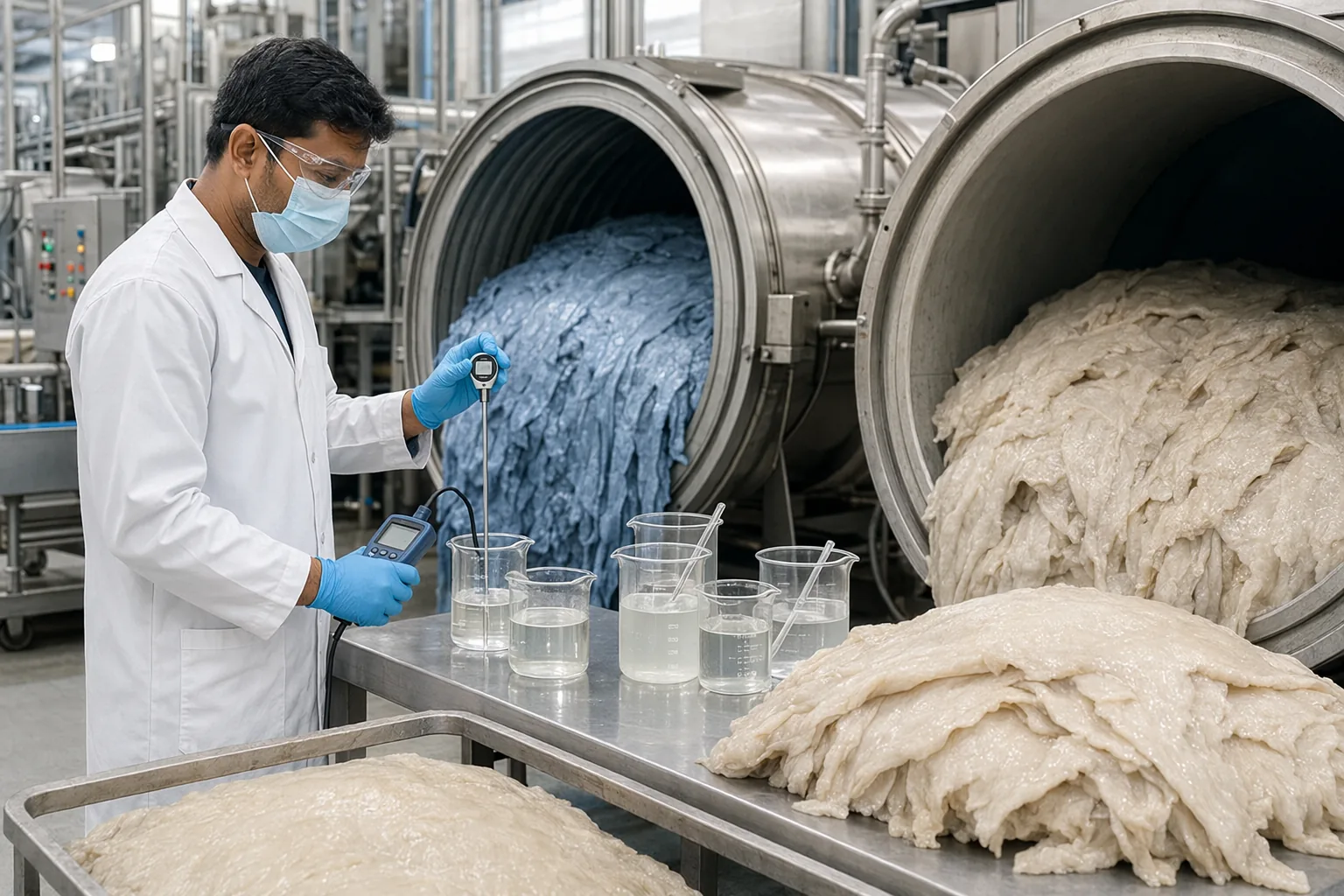
A practical sourcing guide for tanneries and chemical distributors evaluating leather enzymes for controlled bating, cleaner beamhouse operations, and consistent wet-end performance. For tanneries, distributors and resellers buying in bulk: request a quote with the product, quantity and destination.
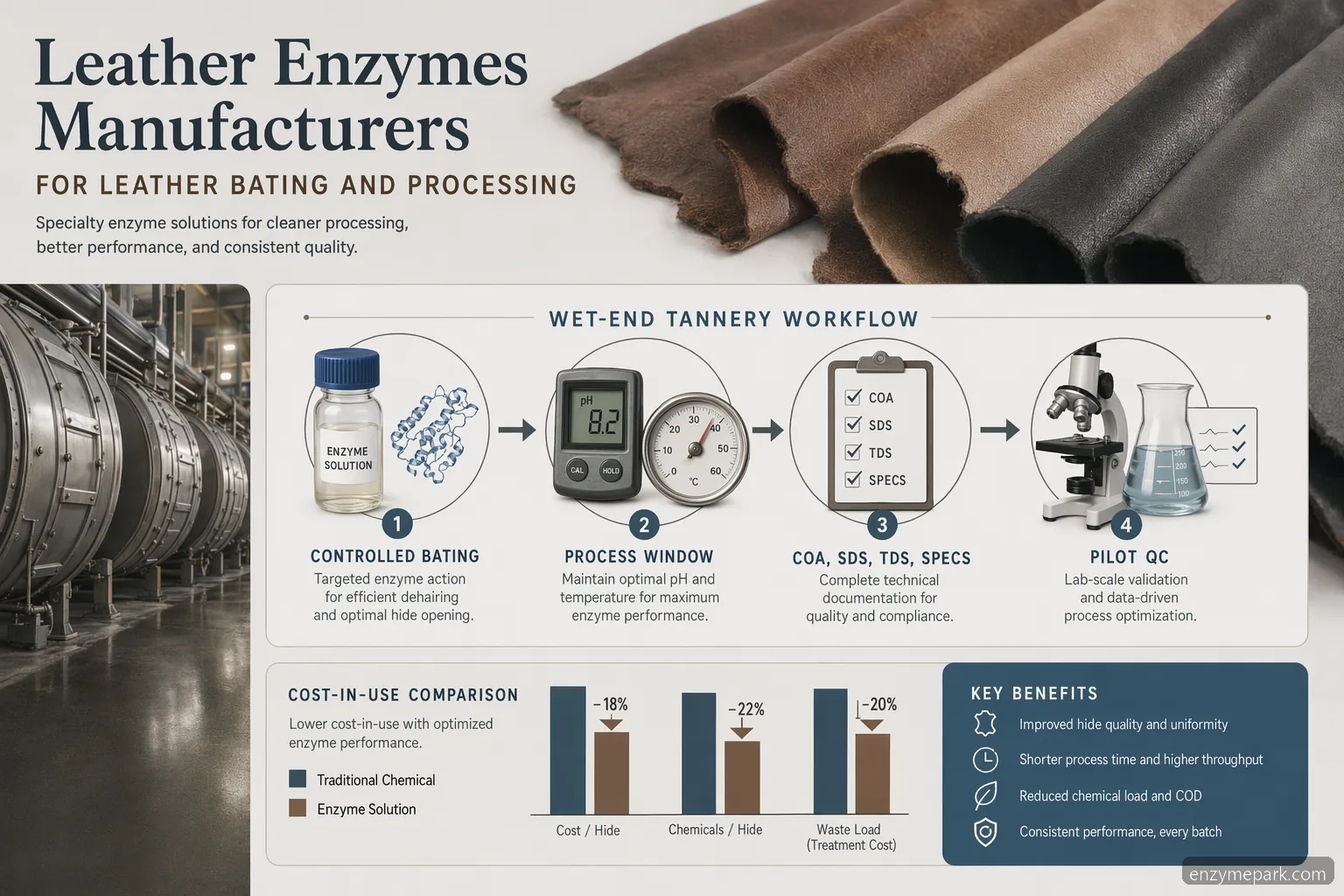
What Industrial Buyers Need from Leather Enzymes Manufacturers
Leather enzymes manufacturers support tanneries that need controlled protein modification without excessive grain damage or inconsistent softness. In leather bating, proteolytic enzymes help remove non-structural proteins after liming and deliming, improving pliability, scud removal, and uniformity before pickling and tanning. The right supplier should describe enzyme type, activity units, carrier system, storage conditions, and application limits in a way that production teams can test. Buyers should avoid selecting only by price per kilogram because activity concentration, stability, dosage, and rework risk determine the real cost-in-use. A reliable leather processing enzyme program starts with a defined article type, hide or skin origin, liming recipe, deliming endpoint, float level, drum speed, and target softness. This allows enzymes in leather manufacturers to recommend a practical starting point instead of a generic product claim.
Define hide type, article target, and beamhouse recipe before requesting samples. • Ask whether the product is optimized for bating, soaking, dehairing, or enzyme tanning support. • Evaluate activity consistency, not only product concentration or visual appearance.
Typical Process Conditions for Leather Bating
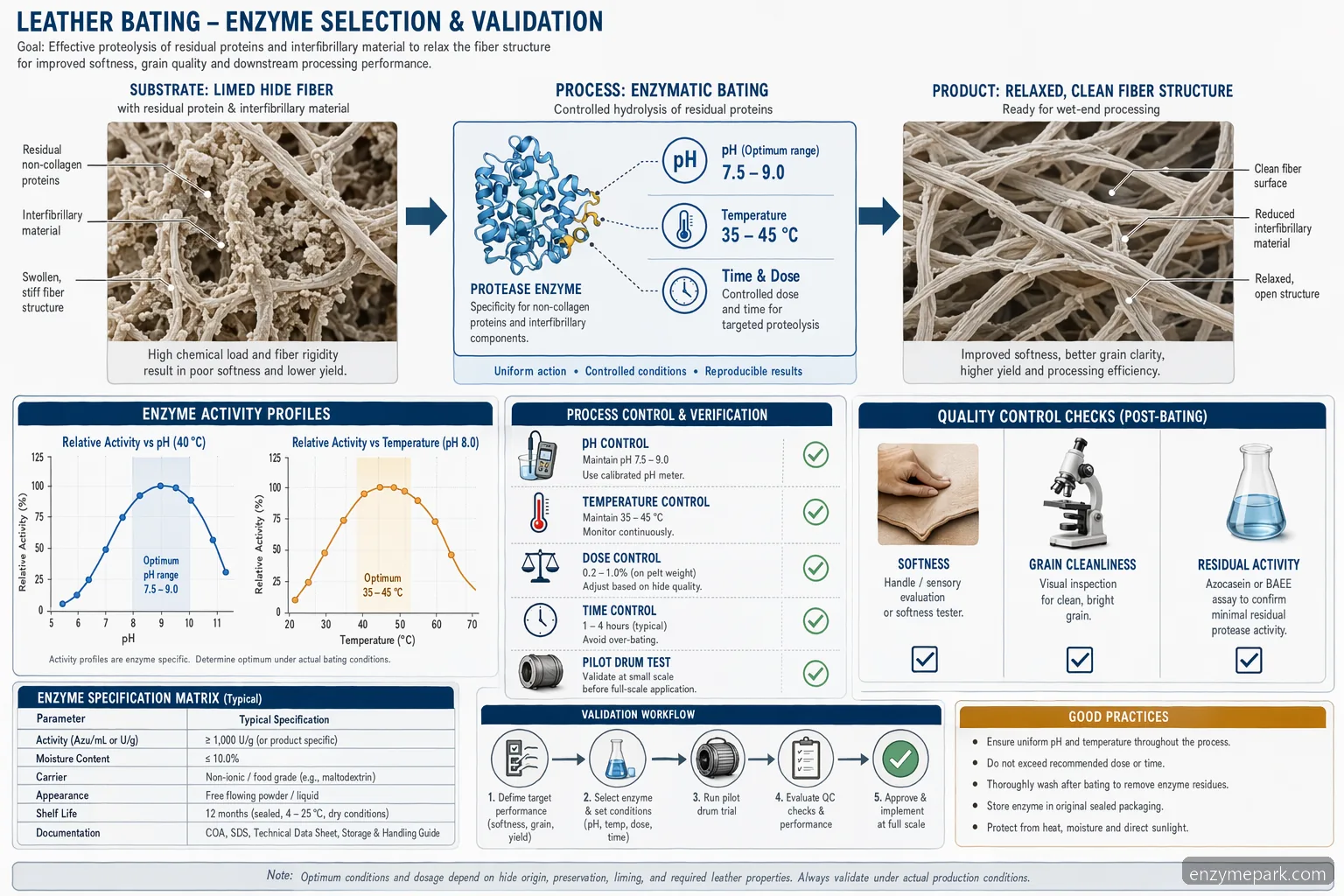
Most bating enzyme trials are run after deliming, when pelts have been brought down from highly alkaline liming conditions to a safer working range for protease activity. Common starting conditions are pH 7.5 to 9.0, 30 to 40 °C, 30 to 90 minutes, and 0.2% to 1.0% product on pelt weight, depending on enzyme activity, pelt thickness, and required softness. Some formulations operate outside this band, so the supplier TDS should always control the final trial design. Over-bating can loosen grain, reduce strength, or create uneven handle, while under-bating may leave scud and produce harsh leather. For every trial, record pH at start and finish, float temperature, drum time, dosage, lot number, and observations after pickling, tanning, and crusting.
Pilot at two or three dosages before changing the full beamhouse recipe. • Keep temperature stable; enzyme activity can change sharply with heat. • Stop the process according to pelt condition, not only elapsed time.
How Enzymes Used in Leather Industry Differ by Application
The use of enzymes in leather industry applications includes soaking, dehairing assistance, bating, degreasing support, and selected enzyme tanning or wet-end modification steps. A bating enzyme is usually selected for controlled proteolysis after deliming, while dehairing enzymes may be designed for hair loosening and reduced chemical load in the beamhouse. Enzyme cleaner for leather and leather safe enzyme cleaner are often consumer or maintenance terms; they should not be confused with industrial leather processing enzymes for wet hides and pelts. Industrial enzyme selection must consider pH, temperature, salt, surfactants, sulfide carryover, lime residue, and the sensitivity of the article being produced. For example, upholstery, garment, upper, and gloving leathers may require different softness targets and risk tolerances. Always align the enzyme to the process stage and the finished leather specification.
Bating enzymes: softness, scud removal, and grain preparation. • Dehairing enzymes: hair loosening and beamhouse assistance. • Soaking enzymes: rehydration support and dirt or protein removal. • Enzyme tanning support: specialty wet-end effects validated case by case.
Documentation to Request Before Buying Leather Enzymes
Professional leather enzymes manufacturers should provide a current Certificate of Analysis, Technical Data Sheet, and Safety Data Sheet for each commercial lot or product grade. The COA should show relevant specification results such as enzyme activity, appearance, moisture or loss on drying where applicable, and manufacturing or batch identification. The TDS should include recommended pH range, temperature range, dosage guidance, storage conditions, shelf life, and compatibility notes. The SDS should support safe handling, transport classification, PPE selection, and spill response. Buyers should also request the activity test method or a clear description of how activity is measured, because units are not always comparable between suppliers. Documentation does not replace plant validation, but it helps procurement, production, and EHS teams screen suppliers efficiently before scale-up.
Request COA, TDS, SDS, and shelf-life guidance before approving a supplier. • Confirm whether activity units are comparable to your current enzyme. • Check storage needs for heat, humidity, and packaging integrity.
Pilot Validation and Quality Control Checks
A strong purchasing decision should be based on pilot validation under tannery conditions, not only laboratory brochures. Run side-by-side trials against the current process using the same pelt source, deliming endpoint, float ratio, temperature, and drum program. QC checks can include touch and handle, pelt cross-section, scud removal, grain tightness, dye levelness, tensile strength, tear strength, elongation, area yield, and article-specific softness. Beamhouse wastewater indicators such as COD, BOD, suspended solids, and sulfide may also be monitored when the enzyme is part of a broader cleaner-processing project. For bating, review results after tanning and crusting because early pelt feel may not predict final leather quality. Document every variable so the supplier can adjust dosage, time, or enzyme grade for the next trial.
Use a control drum and a trial drum whenever possible. • Judge results after downstream tanning, drying, and finishing stages. • Track rework, rejects, and final article consistency.
Supplier Qualification and Cost-in-Use
For buyer-intent sourcing, the best leather enzymes supplier is the one that delivers repeatable performance at the lowest practical cost-in-use. Compare delivered price, recommended dosage, activity per kilogram, process time, rework risk, shelf life, and support required to maintain consistency. Supplier qualification should also review lead time, packaging sizes, sample availability, batch traceability, documentation response time, and technical support for plant trials. Avoid relying on unverifiable claims or broad statements about enzymes in leather industry performance. Instead, ask for application data, recommended trial plans, and realistic operating windows. If a supplier can help troubleshoot pH drift, temperature variation, or over-bating risk, they may reduce production losses beyond the invoice price. Long-term supply should be approved only after repeat lots perform consistently.
Calculate cost per processed metric ton or per batch, not only cost per kilogram. • Confirm minimum order quantity, lead time, and packaging compatibility. • Approve the supplier after repeatable pilot and production results.
Technical Buying Checklist
Buyer Questions
Compare suppliers by enzyme activity, recommended pH and temperature range, dosage on pelt weight, documentation quality, and pilot support. Request COA, TDS, SDS, shelf-life data, and the activity test method. Then run side-by-side tannery trials against your current process. The best choice is not always the lowest price per kilogram; it is the product that delivers consistent softness, grain safety, and lowest cost-in-use.
A common starting band is 0.2% to 1.0% on pelt weight, but the correct dosage depends on enzyme activity, hide or skin type, thickness, deliming endpoint, process time, and target article. Start with a small pilot matrix at two or three dosages. Keep pH, temperature, float, and drum time consistent so differences can be attributed to the leather processing enzyme.
Usually no. A leather safe enzyme cleaner or enzyme cleaner for leather may refer to consumer cleaning products for finished goods. Industrial leather enzymes are used on hides, skins, or pelts during beamhouse and wet-end processing. They require process controls such as pH, temperature, dosage, float ratio, and drum time. Do not substitute consumer cleaners for tannery bating, dehairing, or enzyme tanning applications.
Check pelt feel, scud removal, grain tightness, cross-section uniformity, and absence of over-bating before moving forward. After tanning and crusting, review softness, dye levelness, tensile strength, tear strength, elongation, area yield, and finished article consistency. If environmental goals are part of the project, monitor wastewater indicators such as COD, BOD, suspended solids, and sulfide in a controlled comparison.
A qualified supplier should provide a Technical Data Sheet, Safety Data Sheet, and Certificate of Analysis for the supplied grade or batch. Buyers should also request shelf-life guidance, storage conditions, packaging details, batch traceability, and the enzyme activity test method. These documents help procurement, production, and EHS teams evaluate suitability before pilot validation and commercial approval.
Request a Quote: Wholesale Supply for Tanneries and Resellers
We supply leather processing enzymes to tanneries, leather chemical distributors and resellers on a quote basis. Our Leather Processing Enzymes (Protease 200,000+ U/g; Lipase 50,000+ U/g) ship as light brown powder or granule in 25 kg fiber drums, with an MOQ of 25 kg; prices are quoted per order.
To get a quote, send three things: the product (Leather Processing Enzymes), the quantity per order or per month, and the destination country or port. Add your hide type and process stage if you also want trial guidance with the quote.
Use the quote form on the home page or email hello@mail.enzymepark.com.
Leather Processing Enzymes for Research & Industry
Need Leather Processing Enzymes for your lab or production process?
ISO 9001 certified · Food-grade & research-grade · Ships to 80+ countries
Frequently Asked Questions
How do I compare leather enzymes manufacturers for bating?
Compare suppliers by enzyme activity, recommended pH and temperature range, dosage on pelt weight, documentation quality, and pilot support. Request COA, TDS, SDS, shelf-life data, and the activity test method. Then run side-by-side tannery trials against your current process. The best choice is not always the lowest price per kilogram; it is the product that delivers consistent softness, grain safety, and lowest cost-in-use.
What dosage should we start with for a bating enzyme?
A common starting band is 0.2% to 1.0% on pelt weight, but the correct dosage depends on enzyme activity, hide or skin type, thickness, deliming endpoint, process time, and target article. Start with a small pilot matrix at two or three dosages. Keep pH, temperature, float, and drum time consistent so differences can be attributed to the leather processing enzyme.
Are leather safe enzyme cleaner products the same as industrial leather enzymes?
Usually no. A leather safe enzyme cleaner or enzyme cleaner for leather may refer to consumer cleaning products for finished goods. Industrial leather enzymes are used on hides, skins, or pelts during beamhouse and wet-end processing. They require process controls such as pH, temperature, dosage, float ratio, and drum time. Do not substitute consumer cleaners for tannery bating, dehairing, or enzyme tanning applications.
What QC tests should be used after enzyme bating?
Check pelt feel, scud removal, grain tightness, cross-section uniformity, and absence of over-bating before moving forward. After tanning and crusting, review softness, dye levelness, tensile strength, tear strength, elongation, area yield, and finished article consistency. If environmental goals are part of the project, monitor wastewater indicators such as COD, BOD, suspended solids, and sulfide in a controlled comparison.
What documents should a leather enzyme supplier provide?
A qualified supplier should provide a Technical Data Sheet, Safety Data Sheet, and Certificate of Analysis for the supplied grade or batch. Buyers should also request shelf-life guidance, storage conditions, packaging details, batch traceability, and the enzyme activity test method. These documents help procurement, production, and EHS teams evaluate suitability before pilot validation and commercial approval.
Related: Cleaner Leather Processing Starts Here
Turn This Guide Into a Supplier Brief Request leather bating enzyme samples, COA/TDS/SDS, and pilot trial guidance for your tannery process. See our application page for Cleaner Leather Processing Starts Here at /applications/leather-safe-enzyme-cleaner/ for specs, MOQ, and a free 50 g sample.
Contact Us to Contributehello@mail.enzymepark.com