Leather Enzymes for Leather Bating: Process Control Guide
Troubleshoot leather bating with industrial leather enzymes: dosage, pH, temperature, QC checks, pilot validation, and supplier qualification.
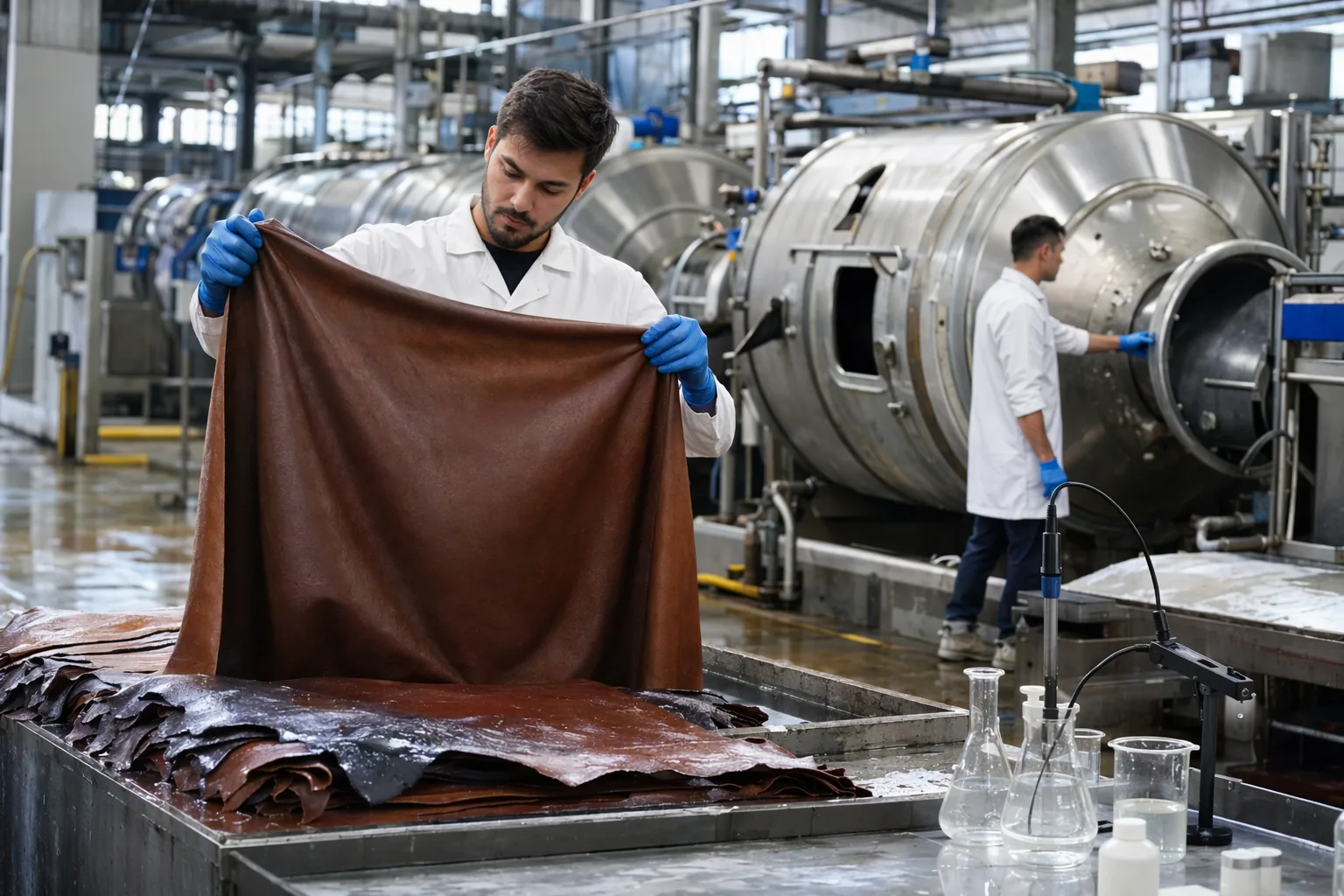
Use leather enzymes for leather bating with tighter control of softness, grain cleanliness, and batch repeatability by validating dosage, pH, temperature, and process time. For tanneries, distributors and resellers buying in bulk: request a quote with the product, quantity and destination.
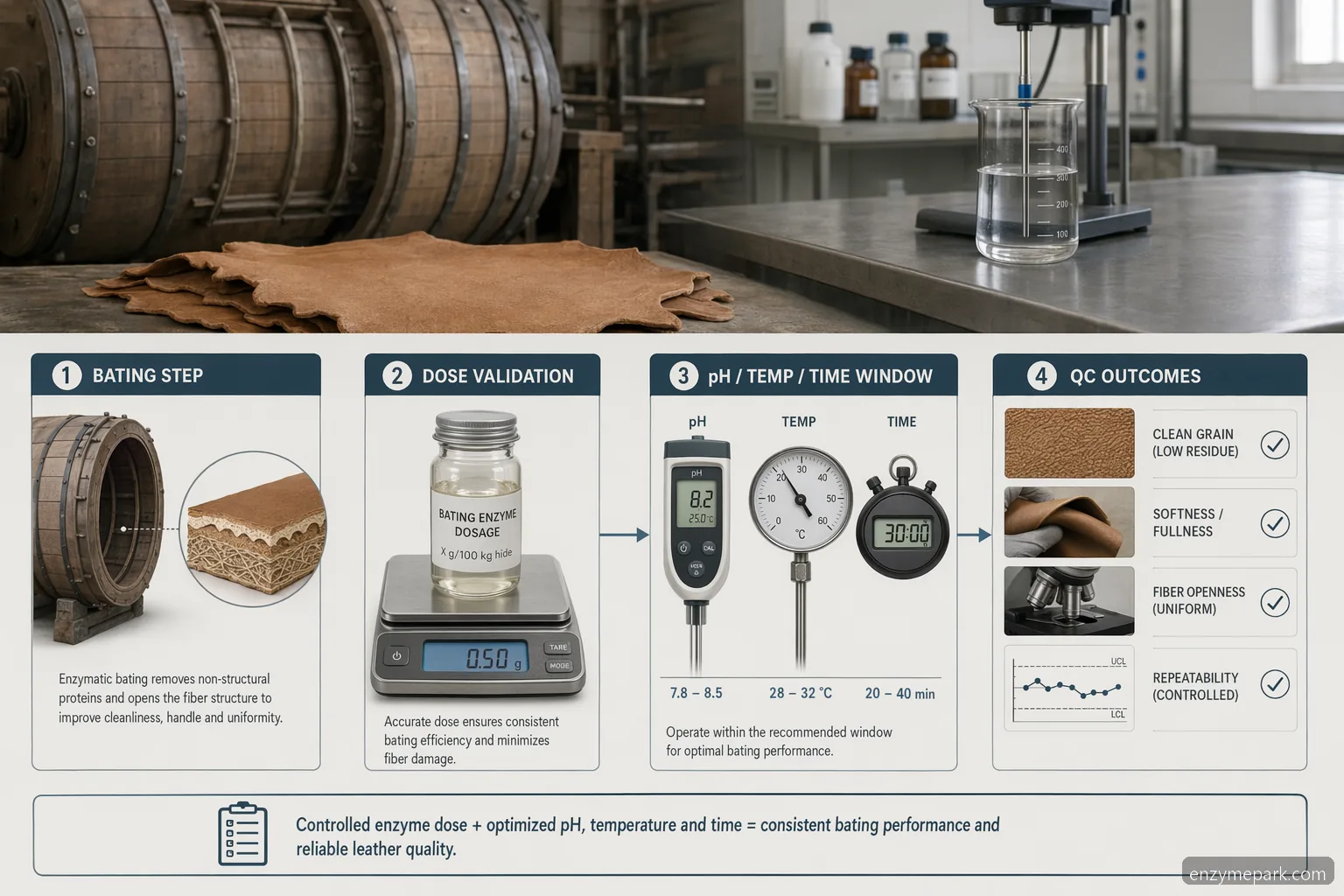
Why bating problems usually start before the enzyme
Leather enzymes for leather bating are selected to remove non-collagenous proteins, open the fiber structure, improve grain smoothness, and support a uniform handle before tanning. When the result is uneven softness, loose grain, poor dye uptake, or over-bating, the enzyme is often blamed first. In practice, the root cause may be variable liming, incomplete deliming, inconsistent pelt thickness, salt content, drum loading, or temperature drift. Industrial leather enzymes leather bating programs work best when the tannery controls the upstream chemistry and records the actual process conditions, not only the recipe. A bating enzyme should be treated as an activity-based process aid, so small shifts in pH, temperature, time, or float can change performance. Troubleshooting should compare enzyme lot, hide origin, beamhouse history, deliming endpoint, and physical QC results across good and bad batches.
Check deliming endpoint before adding enzyme. • Record actual drum temperature, not only water temperature. • Separate enzyme issues from hide selection and liming variation. • Compare grain cleanliness, softness, and tensile-related QC trends.
Practical dosage, pH, and temperature starting points
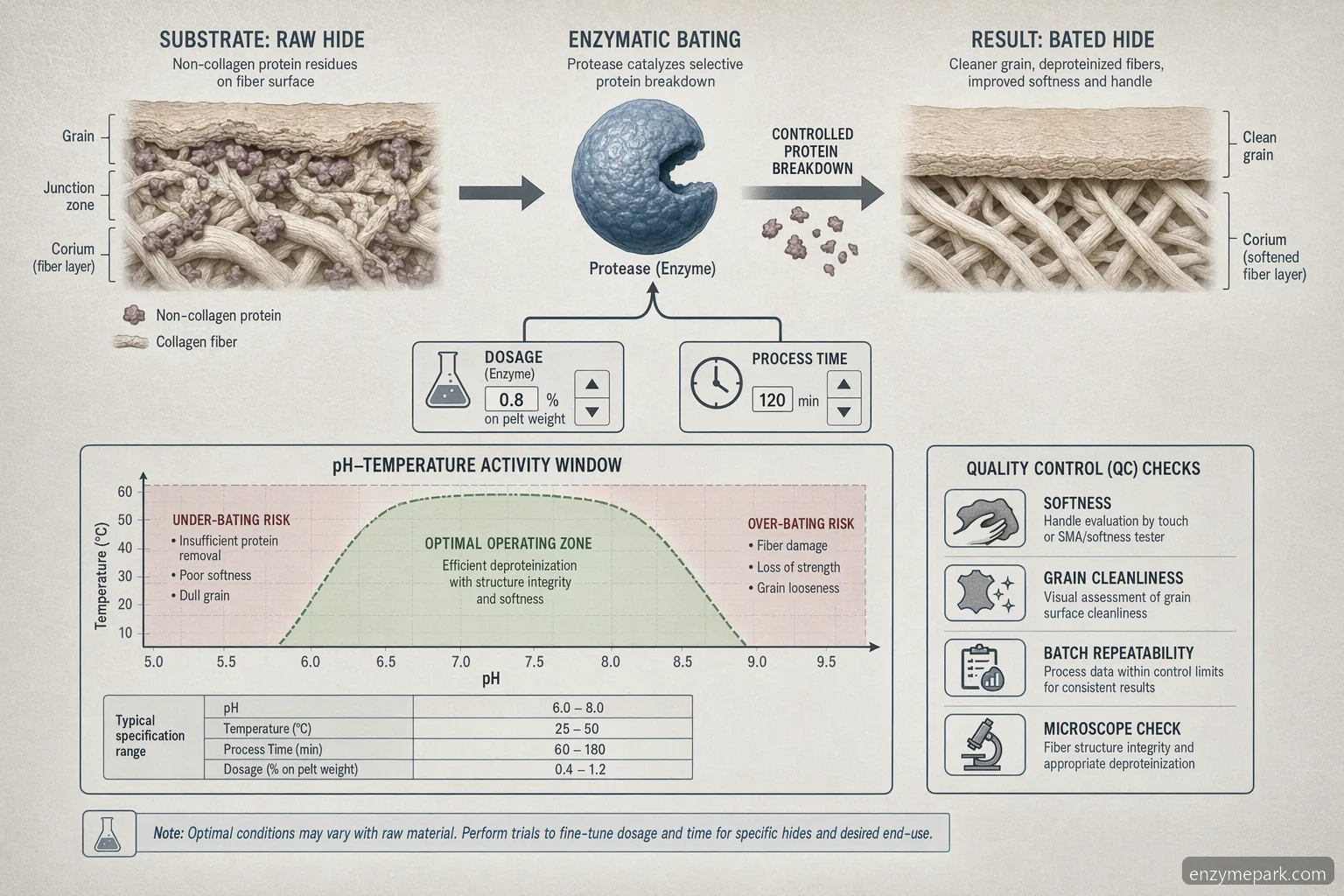
Dosage for leather processing enzymes is normally expressed as a percentage on pelt weight or as activity units per kilogram, depending on the supplier. Many bating trials begin around 0.05-0.30% on pelt weight, with time commonly in the 30-90 minute range. Typical process windows may use pH 7.5-9.0 and 30-38°C for alkaline or neutral protease bating systems, but the exact range must follow the TDS because enzyme composition and activity standardization differ by product. Higher temperature or longer time can increase activity but may also raise the risk of grain looseness or excessive fiber opening. Lower pH, cold drums, high salt, or residual lime can suppress action and create under-bating. For troubleshooting, adjust one variable at a time, keep mechanical action constant, and confirm the result with pelt feel plus measurable QC.
Start with supplier dosage guidance, then bracket in pilot drums. • Avoid changing dosage, pH, and time simultaneously. • Use activity-based comparison when evaluating suppliers. • Stop bating when the target handle and grain condition are achieved.
Fit with dehairing, deliming, tanning, and enzyme tanning goals
The use of enzymes in leather industry processes is broader than bating, including assisted dehairing, soaking, degreasing support, and specialty preparations before tanning. However, the bating stage has a distinct purpose and should not be used to compensate for uncontrolled dehairing or poor deliming. If hair removal is aggressive, the pelt may arrive more open and require lower bating intensity. If liming is mild or uneven, the same bating enzyme dose may produce mixed results across the batch. Before enzyme tanning or chrome-free tanning systems, consistent bating is especially important because fiber opening and residual protein removal can affect penetration and final fullness. A leather safe enzyme cleaner is not a substitute for industrial leather enzymes used in wet-end processing; purchasing teams should confirm intended application, activity type, and compatibility with tannery chemistry.
Match enzyme type to wet-end stage and target substrate. • Confirm compatibility with deliming salts and tanning system. • Do not use cleaning products as processing enzymes. • Review impact on dyeing, filling, softness, and grain tightness.
QC checks for under-bating, over-bating, and repeatability
A reliable bating program combines operator observation with repeatable quality checks. Under-bating may show harsh handle, poor scud removal, dull grain, weak opening, or uneven uptake in later wet-end steps. Over-bating may show loose grain, excessive softness, loss of fullness, or reduced physical performance. Useful controls include pH before and after bating, temperature log, process time, float ratio, pelt weight basis, enzyme lot number, and deliming endpoint. Tannery labs may also track shrinkage temperature after tanning, tensile and tear results on finished crust, grain break, softness, dye uniformity, and area yield. During a supplier change, run side-by-side pilot trials using the same hides, same drum load, and same recipe except for enzyme. Keep retained samples and document results before moving to production scale.
Use control lots when changing bating enzyme supplier. • Track both wet pelt indicators and finished leather performance. • Retain samples from pilot and first production batches. • Build an internal troubleshooting log by hide type and article.
How to qualify a leather enzymes supplier
A leather enzymes supplier for leather bating should provide more than a price quotation. Request a current TDS with activity description, application range, dosage guidance, storage conditions, and compatibility notes. Ask for a COA for each lot and an SDS for safe handling, storage, spill response, and worker protection. Supplier qualification should include lot-to-lot consistency, lead time, packaging integrity, shelf-life control, technical support, and the ability to help with pilot validation. Cost-in-use is usually more meaningful than cost per kilogram because enzyme activity, dose, rework reduction, processing time, and leather quality all affect economics. For B2B procurement, compare products in a controlled pilot, verify documentation, and approve the enzyme only after it meets process, quality, safety, and commercial requirements.
Request COA, TDS, and SDS before approval. • Evaluate cost-in-use, not only purchase price. • Confirm storage temperature and shelf-life requirements. • Require pilot validation before production conversion.
Choosing a Bating Enzyme: What to Ask Before Buying
The enzymes used in leather processing are commonly selected for controlled proteolytic action, process stability, compatibility with auxiliaries, and predictable performance under plant conditions. For leather bating, buyers should ask whether the product is designed for soft bating, standard bating, scud loosening, or a specific article profile. A suitable leather processing enzyme should have a clear activity declaration, storage guidance, shelf-life statement, and application instructions. It should also be supported by a COA, TDS, and SDS for each supplied product or lot, as applicable. Avoid selecting leather enzymes based only on high headline activity, because different assay methods are not always directly comparable. Evaluate the supplier’s technical ability to help interpret trial data, adjust process conditions, and recommend dosage changes without compromising grain strength or final leather uniformity.
Request activity method details, not only activity value. • Compare products by cost-in-use and leather outcome. • Confirm compatibility with deliming agents and auxiliaries. • Review storage temperature and shelf-life limits.
Technical Buying Checklist
Buyer Questions
Leather enzymes for leather bating are mainly used to help remove non-collagenous proteins, improve scud removal, open the fiber structure, and create a smoother grain and softer handle before tanning. They are process aids for wet-end leather manufacturing, not consumer cleaning products or medical supplements. The correct enzyme, dose, pH, temperature, and time depend on the hide type and target leather article.
A practical pilot starting range is often 0.05-0.30% on pelt weight, but the correct dosage must follow the supplier TDS and the stated activity basis. Different leather enzymes can have different strength, formulation, and protease profile, so kilogram-to-kilogram comparisons may be misleading. Run a controlled pilot with low, medium, and high dosage levels, then confirm quality and cost-in-use before production approval.
Many industrial leather enzymes leather bating processes operate around pH 7.5-9.0 and 30-38°C, especially for neutral to alkaline protease systems. These are starting points, not universal rules. The actual operating window should be taken from the product TDS and confirmed in your tannery. Residual lime, cold drums, high salt, or pH drift can reduce performance or create uneven bating.
For under-bating, check deliming endpoint, pH, drum temperature, time, dosage, enzyme storage, and pelt thickness variation. For over-bating, look for excessive temperature, high dose, long time, or unusually open pelts from previous beamhouse steps. Compare good and bad batches using the same QC checklist. Change only one process variable per trial so the cause of the improvement is clear.
Qualify a leather enzymes supplier for leather bating by requesting the TDS, SDS, and lot COA, then running side-by-side pilot validation against your current process. Review activity consistency, documentation, shelf life, packaging, technical support, delivery reliability, and cost-in-use. A lower unit price is not always better if the enzyme requires higher dosage, causes rework, or creates finished leather variability.
Request a Quote: Wholesale Supply for Tanneries and Resellers
We supply leather processing enzymes to tanneries, leather chemical distributors and resellers on a quote basis. Our Leather Processing Enzymes (Protease 200,000+ U/g; Lipase 50,000+ U/g) ship as light brown powder or granule in 25 kg fiber drums, with an MOQ of 25 kg; prices are quoted per order.
To get a quote, send three things: the product (Leather Processing Enzymes), the quantity per order or per month, and the destination country or port. Add your hide type and process stage if you also want trial guidance with the quote.
Use the quote form on the home page or email hello@mail.enzymepark.com.
Leather Processing Enzymes for Research & Industry
Need Leather Processing Enzymes for your lab or production process?
ISO 9001 certified · Food-grade & research-grade · Ships to 80+ countries
Frequently Asked Questions
What are leather enzymes for leather bating used for?
Leather enzymes for leather bating are mainly used to help remove non-collagenous proteins, improve scud removal, open the fiber structure, and create a smoother grain and softer handle before tanning. They are process aids for wet-end leather manufacturing, not consumer cleaning products or medical supplements. The correct enzyme, dose, pH, temperature, and time depend on the hide type and target leather article.
What dosage should I use for a bating enzyme?
A practical pilot starting range is often 0.05-0.30% on pelt weight, but the correct dosage must follow the supplier TDS and the stated activity basis. Different leather enzymes can have different strength, formulation, and protease profile, so kilogram-to-kilogram comparisons may be misleading. Run a controlled pilot with low, medium, and high dosage levels, then confirm quality and cost-in-use before production approval.
What pH and temperature are typical for leather bating?
Many industrial leather enzymes leather bating processes operate around pH 7.5-9.0 and 30-38°C, especially for neutral to alkaline protease systems. These are starting points, not universal rules. The actual operating window should be taken from the product TDS and confirmed in your tannery. Residual lime, cold drums, high salt, or pH drift can reduce performance or create uneven bating.
How do I troubleshoot under-bating or over-bating?
For under-bating, check deliming endpoint, pH, drum temperature, time, dosage, enzyme storage, and pelt thickness variation. For over-bating, look for excessive temperature, high dose, long time, or unusually open pelts from previous beamhouse steps. Compare good and bad batches using the same QC checklist. Change only one process variable per trial so the cause of the improvement is clear.
How should I qualify a leather enzymes supplier?
Qualify a leather enzymes supplier for leather bating by requesting the TDS, SDS, and lot COA, then running side-by-side pilot validation against your current process. Review activity consistency, documentation, shelf life, packaging, technical support, delivery reliability, and cost-in-use. A lower unit price is not always better if the enzyme requires higher dosage, causes rework, or creates finished leather variability.
Can leather enzymes replace all beamhouse chemicals?
Leather enzymes can improve process control and may reduce dependence on some harsh operating conditions, but they do not automatically replace all beamhouse chemicals. Deliming, pH adjustment, float control, preservation, pickling, and tanning still require properly designed chemistry. The practical role of enzymes for leather processing should be proven through pilot validation, safety review, and quality testing under your plant conditions.
Related: Cleaner Leather Processing Starts Here
Turn This Guide Into a Supplier Brief Request a leather bating enzyme review with TDS, SDS, COA, and pilot trial guidance for your tannery process. See our application page for Cleaner Leather Processing Starts Here at /applications/leather-safe-enzyme-cleaner/ for specs, MOQ, and a free 50 g sample.
Contact Us to Contributehello@mail.enzymepark.com